AI-Powered Platforms for Governance That Works

No marketing adjectives unless they earn their place. No features without governance context. No tech without outcomes.

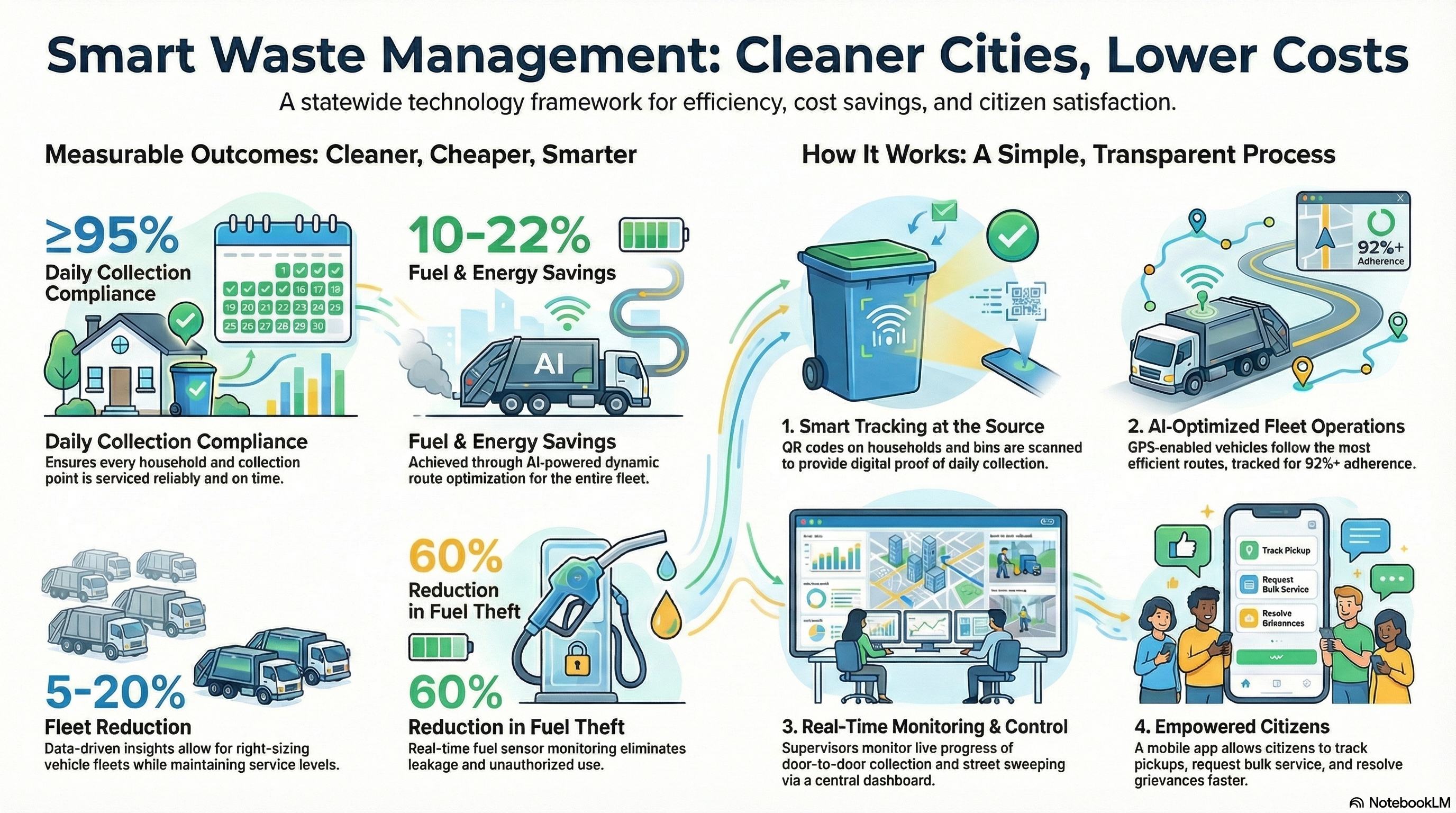
SWAMA Smart Waste Management Infographic - Cleaner Cities, Lower Costs with measurable outcomes and transparent process
Flagship Platform

SWAMA — Smart Waste Monitoring & Automation

The Operating System for Modern Waste Management

The Problem

Urban waste management fails not because cities lack vehicles or manpower — it fails because operations are opaque, fragmented, and hard to enforce.

Common systemic issues include:

  • Missed or partial collections with no verifiable proof
  • Route deviations and inefficient fleet movement
  • Contractor non-compliance and weak accountability
  • Manual reporting, delayed audits, and reactive enforcement
  • Poor citizen experience and low trust

Most systems provide visibility after failure. SWAMA is designed to prevent failure by design.

Platform Overview

SWAMA is an AI-driven governance platform that unifies:

  • GPS & telematics data from vehicles
  • IoT sensors (where available)
  • Mobile workflows for field staff
  • Administrative dashboards for city and state authorities

into a single operational intelligence layer.

It operates continuously — at street, ward, zone, and city level — enabling real-time monitoring, automated detection of violations, and data-backed decision-making.

AI Models Powering SWAMA

Route Optimization Intelligence

AI-driven routing that dynamically adapts to:

  • Service zones and ward boundaries
  • Vehicle capacities and types
  • Time windows and shift constraints
  • On-ground disruptions and delays

This replaces static route plans with living operational routes.

Missed Pickup Detection

Machine learning models correlate:

  • GPS movement
  • Stop duration
  • Route completion patterns

to automatically detect missed households, partial coverage, and repeated service gaps — without manual verification.

Geo-fencing & Zone Violation Detection

AI continuously evaluates vehicle behaviour against:

  • Assigned wards and routes
  • Authorized dumping points
  • Time-bound movement constraints

Flagging violations instantly, not during audits weeks later.

Attendance & Productivity Inference

Instead of manual attendance registers, SWAMA infers:

  • Actual working hours
  • Coverage achieved per shift
  • Productivity at individual, crew, and contractor level

using movement, activity, and task completion signals.

Outcomes Delivered

SWAMA is measured by outcomes, not features.

Operational cost reduction through optimized routing and reduced fuel wastage
Higher compliance via automated enforcement and audit trails
Improved citizen experience through consistent service delivery
Administrative efficiency with reduced manual monitoring and reporting

Deployment Models

SWAMA is designed for government realities, not ideal conditions.

ULB-level deployments for single municipalities
State-level rollouts with multi-city oversight
PPP models supporting contractor-based operations

Deployment options include on-premise, state data centers, or cloud — aligned with policy and security requirements.

Case Snapshots

(Representative examples – details shared during engagement)

  • City-wide deployment covering door-to-door collection and transportation
  • AI-based route optimization reducing redundant travel
  • Automated detection of missed routes and non-compliance
  • Real-time dashboards for municipal leadership
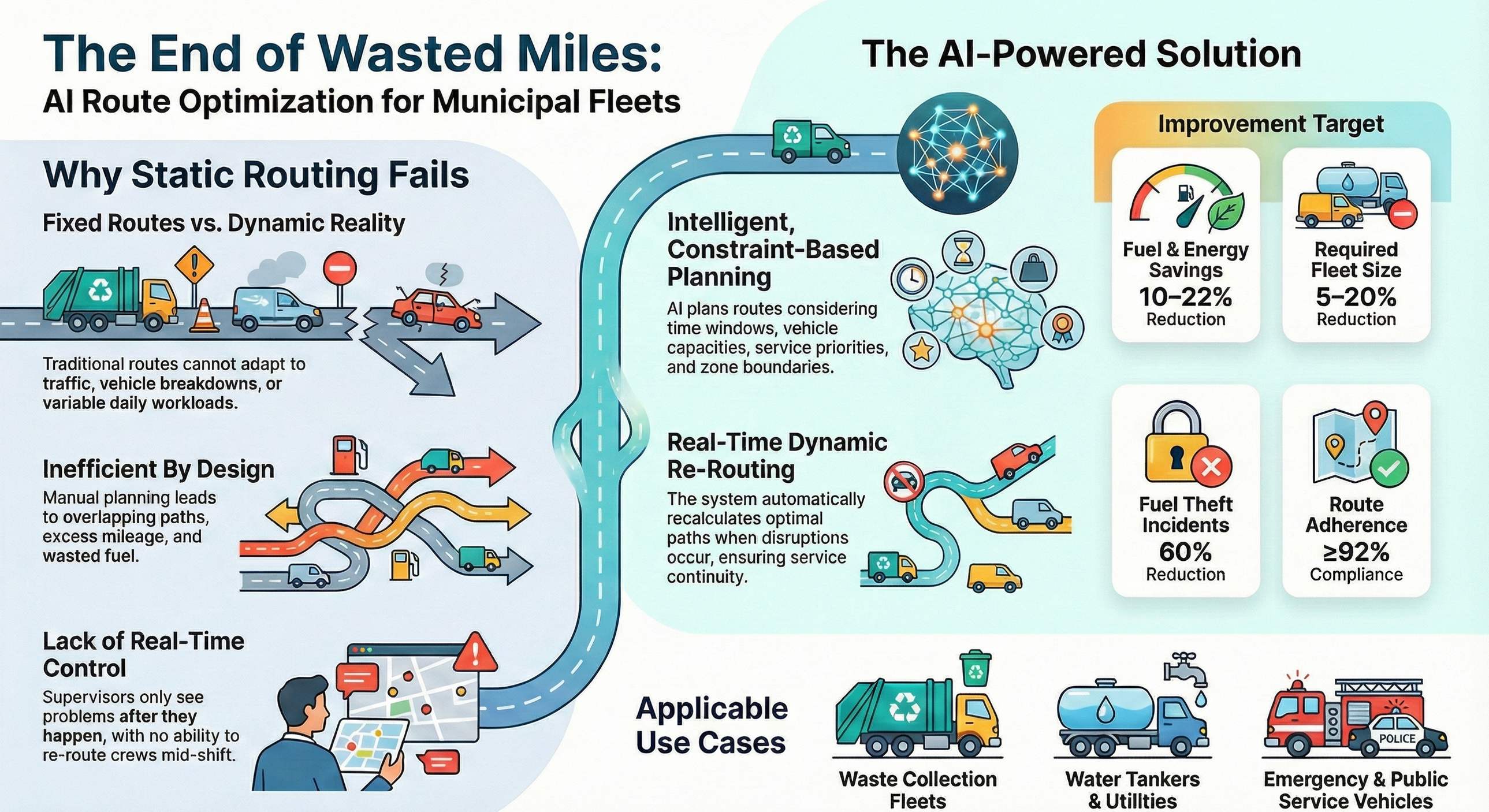
AI Route Optimization Infographic - The End of Wasted Miles showing static routing problems vs AI-powered solutions
AI-Powered

AI Route Optimization

For Municipal & Public Service Fleets

Why Static Routing Fails

Traditional GPS systems rely on:

  • Fixed routes
  • Manual updates
  • Post-facto reporting

They cannot adapt to real-world conditions like congestion, delays, vehicle breakdowns, or variable workloads.

Dynamic, Constraint-Based Routing

Our AI routing engine plans and re-plans routes using:

Time windows Vehicle capacities Zone boundaries Service priorities Real-time feedback

Routes evolve continuously — not once per day.

Real-Time Re-Routing

When disruptions occur — delays, vehicle unavailability, spillover workloads — the system dynamically recalculates optimal paths, ensuring service continuity.

Tangible Benefits

Reduced fuel consumption
Lower travel time and idle hours
Improved asset utilization
Predictable service delivery

Applicable Use Cases

Waste collection vehicles Water tankers Municipal service fleets Emergency routing
Telematics Anomaly Detection Infographic coming soon
Machine Learning

Telematics Anomaly Detection

AI Beyond Dashboards

The Problem with Traditional GPS Systems

Most telematics platforms show:

  • Where vehicles went
  • How long they stopped

They do not explain whether behaviour was normal, wasteful, or manipulative.

Anomalies Detected by Our AI

The system automatically flags:

Route deviations beyond acceptable variance
Fake or circular trips
Fuel theft and abnormal consumption patterns
Excessive idling and misuse
Sensor disconnection or tampering

How AI Enables This

Behavioural baselines built from historical data
Pattern learning across vehicles and crews
Drift detection to catch slow manipulation over time

No hard-coded rules alone. The system learns how operations actually behave.

Governance-Ready Outputs

Real-time alerts
Vehicle and contractor risk scores
Complete audit trails for enforcement and reviews

Designed for accountability, not just monitoring.

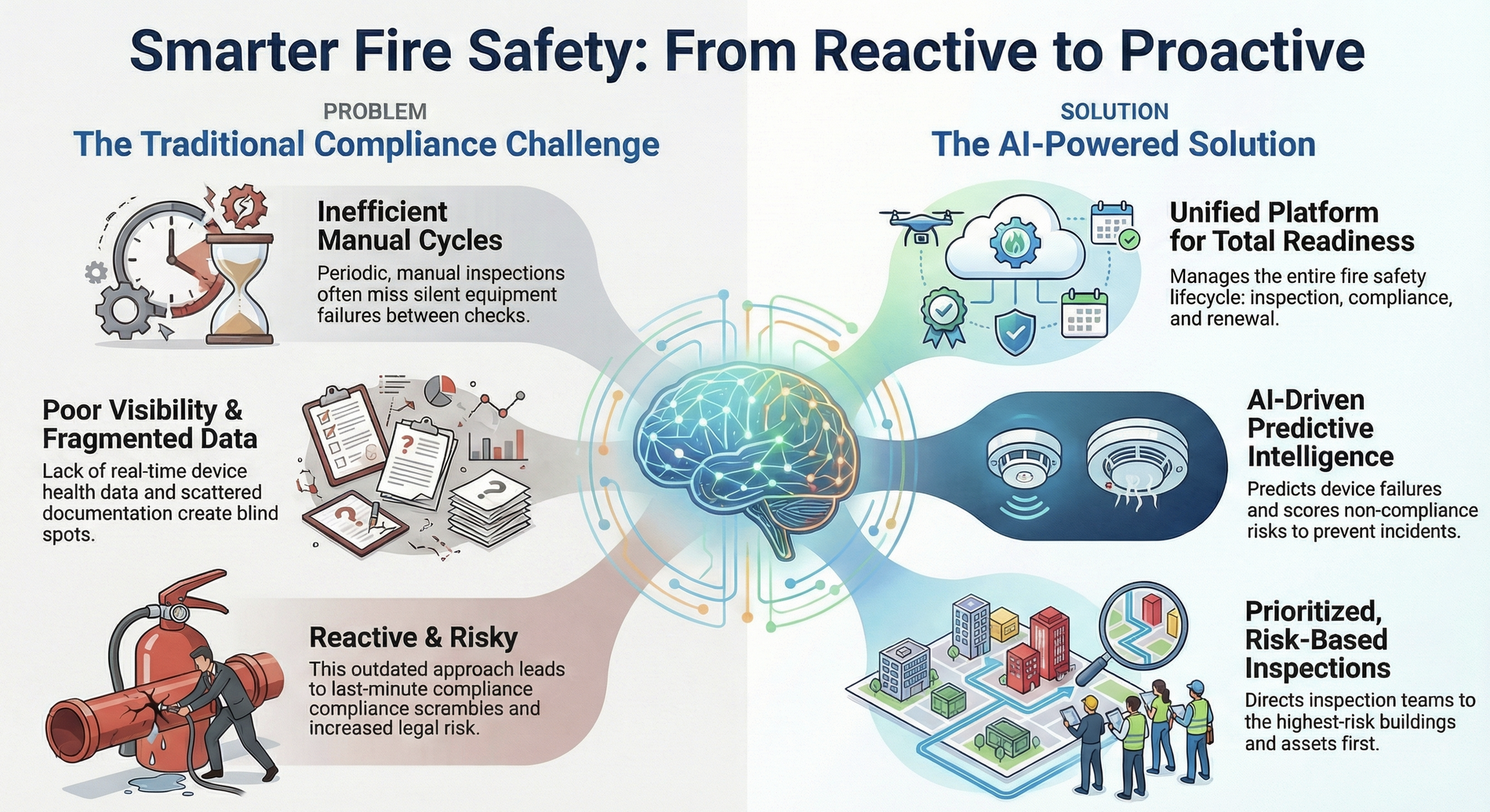
Fire Safety Infographic - From Reactive to Proactive showing traditional challenges vs AI-powered solutions
IoT Platform

Fire Safety & Emergency IoT Platform

Compliance. Readiness. Accountability.

The Compliance Challenge

Fire safety systems often fail due to:

  • Manual inspection cycles
  • Poor visibility into device health
  • Reactive compliance checks
  • Fragmented documentation

This creates risk — both operational and legal.

Platform Scope

The platform supports the full FireNOC lifecycle:

1
Inspection
2
Compliance tracking
3
Renewal & audit readiness

Integrated with:

Hydrants Pumps Alarms Building Management Systems (BMS)

AI-Driven Safety Intelligence

Device Health Prediction

Early detection of failing or degraded safety equipment.

Non-Compliance Risk Scoring

Prioritizing buildings and assets based on risk, not random schedules.

Inspection Prioritization

Directing limited inspection capacity where it matters most.

Designed For

Fire departments Industrial safety teams High-rise buildings Critical infrastructure

Focused on readiness and prevention, not gadgets.

Ready to See These Solutions in Action?

We work best through real pilots, real data, and real operational outcomes. Let's start with a focused conversation about your specific challenges.